

SEO URL:
/traditional-offline-marketing-vs-digital-marketing
Traditional offline marketing vs digital marketing explained. Learn key differences, costs, and benefits to choose the right strategy today.
Marketing is changing faster than ever.
Billboards and newspaper ads once dominated attention.
Today, social media, search engines, and online ads drive most buying decisions.
This shift has created an important debate: traditional offline marketing vs digital marketing.
If you are between 18 and 45 years old, understanding traditional offline marketing vs digital marketing can help you:
- Choose the right career
- Grow your business faster
- Spend your marketing budget wisely
- Get better returns from campaigns
In this guide, you will learn how traditional offline marketing vs digital marketing works, their strengths, weaknesses, and when to use each.
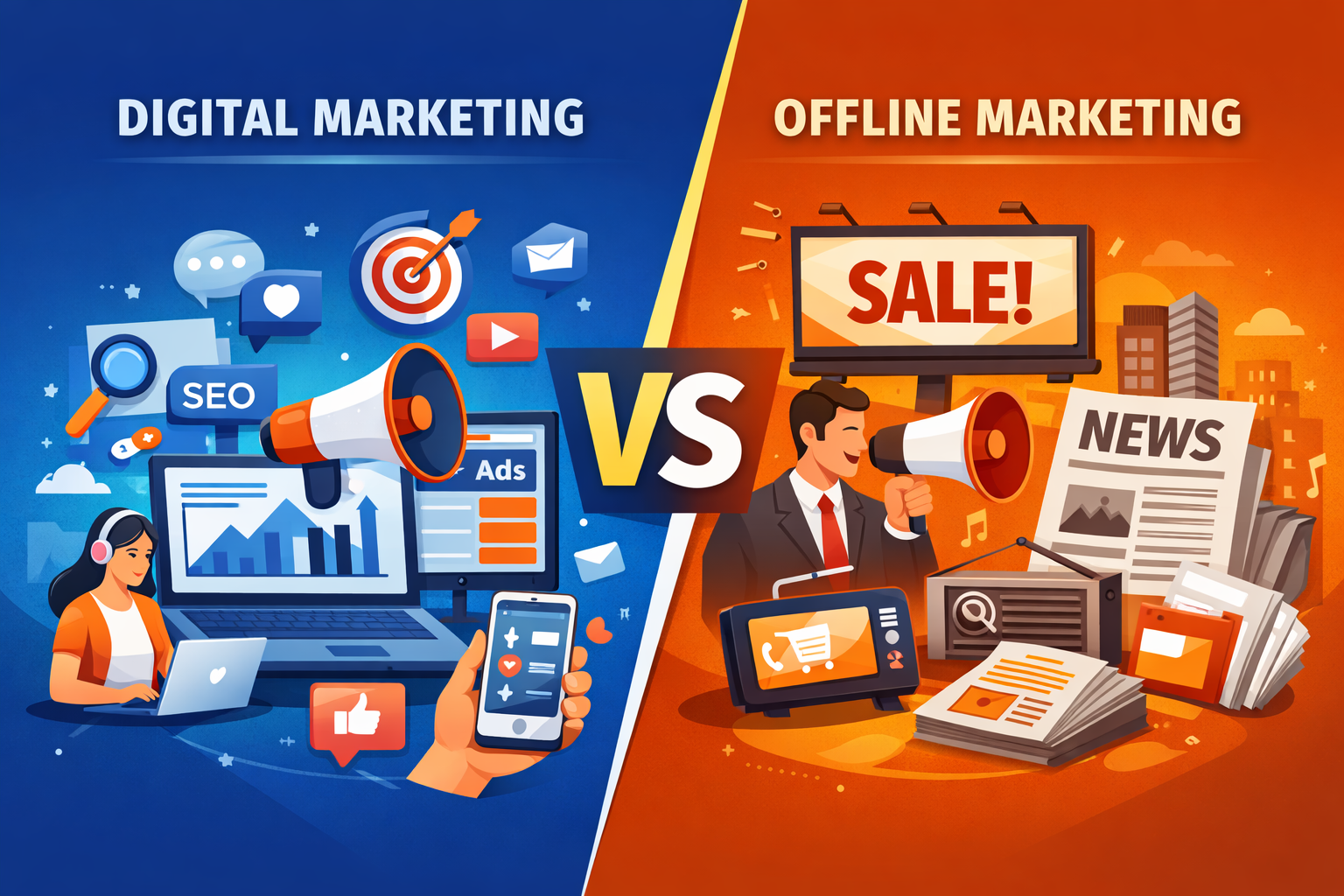
Visual Comparison


Image alt text:
traditional offline marketing vs digital marketing comparison infographic
What Is Traditional Offline Marketing?
Traditional marketing refers to promotional methods that do not rely on the internet.
These methods existed long before smartphones and social media.
Common Traditional Marketing Channels
- Newspaper ads
- Magazine ads
- Television commercials
- Radio advertising
- Billboards and hoardings
- Flyers and pamphlets
- Direct mail campaigns
- Event sponsorships
Real-World Example
A coaching institute distributes flyers around nearby colleges to attract students.
This is a classic offline strategy.
Benefits of Traditional Marketing
- Strong local visibility
- Builds brand credibility
- Reaches non-digital audiences
- Tangible promotional materials
Limitations
- High advertising costs
- Difficult to track performance
- Limited audience targeting
- Slow campaign changes
What Is Digital Marketing?
Digital marketing involves promoting products or services using internet-based platforms.
It allows businesses to reach the right audience with precision.
Major Digital Marketing Channels
- Search Engine Optimization (SEO)
- Social media marketing
- Google Ads
- Email marketing
- Content marketing
- Influencer partnerships
Real-World Example
A small clothing brand runs Instagram ads targeting users aged 18–30 in metro cities.
That is a digital campaign.
Benefits of Digital Marketing
- Lower cost compared to traditional ads
- Highly targeted audience selection
- Real-time performance tracking
- Global reach
- Easy scaling
Limitations
- Requires technical skills
- Competitive online space
- Needs consistent optimization
Traditional Offline Marketing vs Digital Marketing: Key Differences
| Factor | Traditional Methods | Digital Methods |
|---|---|---|
| Cost | High | Flexible budgets |
| Reach | Local or regional | Global |
| Targeting | Broad audience | Highly specific |
| Tracking | Difficult | Real-time analytics |
| Interaction | One-way | Two-way engagement |
| Speed | Slow execution | Instant launch |
Understanding traditional offline marketing vs digital marketing helps businesses allocate budgets more effectively.
Why Businesses Are Moving Online
Consumer behavior has shifted.
People now spend more time on:
- Social media platforms
- Search engines
- Video streaming apps
- E-commerce websites
Businesses follow where attention goes.
Main Reasons for the Shift
- Affordable internet access
- Massive smartphone adoption
- Data-driven decision making
- Lower advertising costs
- Better ROI tracking
Example
A startup spends ₹3,000 on Instagram ads.
It reaches 20,000 targeted users.
A newspaper ad with similar reach may cost ₹15,000 or more.
This difference clearly shows the impact of traditional offline marketing vs digital marketing in terms of cost and results.
Cost Comparison: Offline vs Online Campaigns
Traditional Campaign Example
- Newspaper ad: ₹25,000
- Reach: 60,000 readers
- Targeting: None
- Tracking: Limited
Digital Campaign Example
- Social media ads: ₹5,000
- Reach: 70,000 targeted users
- Detailed analytics
- Easy optimization
Result
- Lower cost
- Better targeting
- Measurable results
Real-World Use Cases
When Traditional Marketing Works Best
Offline marketing still has value.
Best for:
- Local businesses
- Political campaigns
- Rural audiences
- Brand awareness campaigns
Example:
A grocery store uses banners and posters around the neighborhood.
When Digital Marketing Works Best
Online methods are ideal for:
- Startups
- E-commerce stores
- Freelancers
- Service providers
- Personal brands
Example:
A freelance designer gets clients through Instagram and Google search.
The Hybrid Approach: Best of Both Worlds
Smart businesses combine both strategies.
Example Hybrid Strategy
- Billboard for awareness
- Social media ads for engagement
- Search ads for conversions
- Email campaigns for retention
This creates a complete marketing funnel that balances traditional offline marketing vs digital marketing effectively.
Why Online Marketing Works for Ages 18–45
This age group is:
- Mobile-first
- Social media active
- Research-oriented
- Budget-conscious
They:
- Compare products online
- Read reviews
- Watch videos before buying
- Follow influencers
Online campaigns match their behavior perfectly.
Top Digital Marketing Channels to Focus On
1. Search Engine Optimization (SEO)
Helps websites rank higher on search engines.
Benefit:
Free organic traffic.
(External Link: https://developers.google.com/search/docs/fundamentals/seo-starter-guide)
2. Social Media Marketing
Promotes brands on platforms like Instagram, Facebook, and LinkedIn.
Benefit:
Direct audience engagement.
3. Pay-Per-Click Advertising
Paid ads on search engines and social platforms.
Benefit:
Instant traffic and leads.
(External Link: https://ads.google.com/home/resources/)
4. Content Marketing
Blogs, videos, and guides that educate customers.
Benefit:
Builds authority and trust.
(Internal Link: /complete-digital-marketing-guide)
5. Email Marketing
Direct communication with subscribers.
Benefit:
High return on investment.
(External Link: https://www.hubspot.com/email-marketing)
Career Opportunities in Digital Marketing
This field is growing rapidly.
Popular roles include:
- SEO executive
- Social media manager
- PPC specialist
- Content marketer
- Email marketing specialist
Entry-Level Salary in India
- ₹15,000–₹30,000 per month
- Higher with experience
Expert Tips for Choosing the Right Strategy
Follow this simple process.
- Identify your target audience.
- Set clear marketing goals.
- Choose platforms wisely.
- Allocate budget carefully.
- Track performance weekly.
- Optimize campaigns based on data.
Pro Tip:
Start small. Test. Then scale.
Conclusion
The debate around traditional offline marketing vs digital marketing is not about choosing one forever.
It’s about choosing what works for your goals.
Traditional marketing builds local trust and brand recall.
Digital marketing offers:
- Better targeting
- Lower costs
- Measurable results
- Global reach
For most people aged 18–45, traditional offline marketing vs digital marketing clearly shows that digital strategies provide stronger opportunities for growth.
Final Takeaway
Start with digital.
Add offline channels when needed.
Track everything.
Optimize constantly.